Send a request
Calorimetric Thermometer
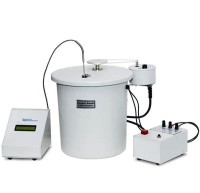
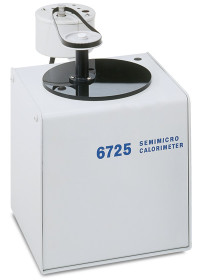
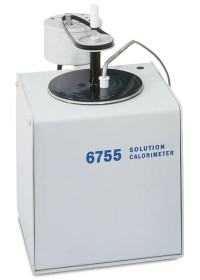
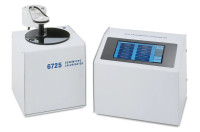
The LECT-6772 Calorimetric Thermometer provides high precision temperature measurement using the control architecture of the related combustion calorimeter series. It forms an integral part of both the semimicro and dissolution calorimeters. The same thermometer can add automatic control and communication functions to a plain jacket calorimeter.
This description defines the product family. Guaranteed performance, included hardware, exclusions, interfaces and acceptance criteria are stated only in the project-specific technical proposal and approved datasheet.
- Measurement operating range: 10 to 50 °C
- Temperature resolution: 0.0001 °C
- Absolute accuracy without calibration: ± 0.100 °C
- Absolute accuracy after calibration: ± 0.0500 °C
- Repeatability at a single point: ± 0.002 °C
- Linearity across a 10 °C span: ± 0.002 °C
- Balance connection through a USB Port
- Printer connection through a USB Port
- Ethernet network link using TCP/IP
- Overall dimensions (cm): 56w x 36d x 31h
Sensor input and signal processing
The thermometer is supplied with one thermistor probe as standard. A second thermistor probe is an available option, and the instrument can collect measurements from both thermistors. Its microprocessor linearizes the temperature signal. This processing provides high resolution and precise repeatability throughout each operating range.
Automatic calorimetric calculations
Temperature measurement is only part of the thermometer's test function. It also determines the net rise in temperature and applies the required corrections. According to the calorimeter function chosen by the operator, it calculates the heat of combustion and reports the result for the connected calorimeter.
Data input, storage and transfer
Adding the thermometer to a calorimetric system provides facilities for acquiring weights from a balance, printing measured data and sending data to a computer. All collected data can be passed to a connected printer. The printer can be attached to the USB port on the rear of the thermometer, or a printer on the laboratory network can receive the output.
Several types of balance input are supported. Eight communication protocols are provided, together with a generic input driver for balances that do not use any of those protocols. The balance communicates through the USB connection on the back of the instrument.
During a test, the calorimetric thermometer can operate as a data logger and transfer the collected measurements in csv format. Another option is to retain the data internally and display or print a final test report. Test files can be sent to a computer on the Ethernet network through FTP File Transfer Protocol. An SD memory card provides an alternative way to transfer them. A web browser can also be used to view the test reports and print them.


| Brand | Coretest |
