PVT


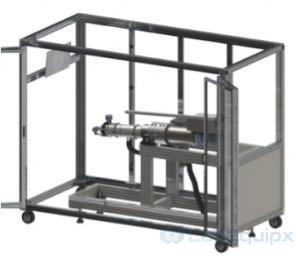

PVT analysis equipment measures how a reservoir hydrocarbon changes phase and volume with pressure and temperature. The term here refers to pressure-volume-temperature studies of live oil and gas condensate, not to biological or medical testing. Coretest supplies mercury-free PVT cells, viscometers, density cells, recombination cells and PVT laboratory support equipment, manufactured in-house in Hastelloy C276 and titanium.
What the range covers
- Phase behavior: Full-Visual PVT System, Compact PVT Cell, Wax and Asphaltene PVT System, Mobile PVT System, Equilibrium and Multistage Flash Separators, Bubble-Point Pressure Apparatus, gasometers, pycnometers
- PVT 400cc 1000 bar cell
- Viscosity: Rolling-Ball, Capillary, Electromagnetic and Heavy-Oil Viscometers
- Density: Digital Density Meter and HPHT Density Cell
- Fluid recombination: Recombination Cell and Mobile Recombination and Restoration Apparatus
- Fluid composition: Hydrocarbon compositional analyzer and Molecular weight tester
- PVT accessories: Gas Booster, Pressure Generator System, Deadweight Pressure Gauge, Solvent Cleaner, cylinder heating trolleys, Sample Restoration Apparatus
- Software
Engineering features
The reference cell is the 400 ml full-visual PVT cell rated to 15,000 psi (1,000 bar) from ambient to 200 °C, with a sub-ambient option to -20 °C. The pressure boundary is Hastelloy C276 with polyimide seals resistant to fast gas decompression. A magnetic stirrer and motorized rocking bring the sample to equilibrium, a video camera records the interfaces, and volume is read to 0.001 ml. Standard programs are constant composition expansion, differential liberation, separator tests at several temperatures and, for gas condensate, constant mass and constant volume depletion.
Viscosity and density are measured in separate high-pressure cells. The Rolling-Ball Viscometer covers 0.2 to 10,000 cp at 15,000 psi and up to 190 °C on an 11 ml sample. The HPHT Density Cell is a 4 cc titanium cell rated 10,000 psi (700 bar) and 175 °C. Heavy-oil, capillary and electromagnetic viscometers extend the range to bitumen.
Live fluid is rebuilt in the Recombination Cell, a 2,000 cc vessel rated 15,000 psi and 175 °C with rocking mixer, magnetic stirrer and a bull's eye window for bubble-point and dew-point detection. Flash separators, gasometers and pycnometers close the material balance on the gas and liquid phases.
Selecting a configuration
Cell volume, pressure class and optics are chosen from the fluid and the test program. Coretest configures a PVT laboratory from these inputs:
- Fluid type: black oil, volatile oil, gas condensate, heavy oil, or fluids with wax and asphaltene
- Maximum reservoir pressure and temperature, including sub-ambient work
- Corrosivity: H2S and CO2 content, which sets Hastelloy or titanium wetted parts
- Measurement channels: visual, video, viscosity, density, composition
- Automation level, from manual pressure generation to automated pump and temperature control
Typical applications
- Black oil and gas condensate PVT reports for material balance and simulation
- Equation-of-state tuning from composition, density and phase envelope data
- Viscosity of live oil and heavy oil at reservoir conditions
- Wax and asphaltene precipitation studies for flow assurance
- Separator test optimization and GOR measurement
Reference values above describe the product family. Guaranteed performance, included hardware, exclusions, interfaces and acceptance criteria are stated only in the project-specific technical proposal and approved datasheet.
