Multi Reactor Systems

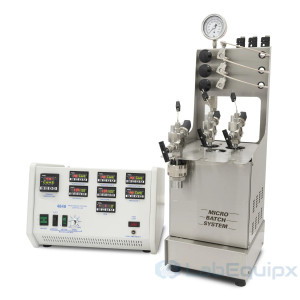
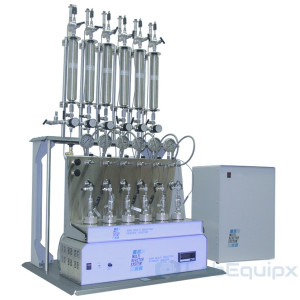

Multi-reactor systems run several pressure reactions at once from one controller, heater block or gas manifold. They are built for catalyst screening and process development groups that compare conditions across several small vessels instead of running them in sequence. Coretest supplies micro batch and multiple reactor stations, and parallel systems built from stirred reactors of 100 mL to 30 L.
What the range covers
- Micro Batch Reactor System MBRS-2500 Series: three 5 mL or 10 mL reactors on a common heater block, 3000 psi (207 bar) at 300 °C
- Multiple Reactor System MRS-5000 Series: six stirred 45 mL or 75 mL vessels, 3000 psi (200 bar), to 300 °C
- Parallel Reactor Systems with three, four, five, twelve or sixteen stations, and Three 30 L Reactor Parallel System
- Parallel Synthesizers 100 mL to 2 L, Stirred Synthesizers 250 and 500 mL, Stirred Autoclave 750 mL
Engineering features
Each micro reactor is a Type 316 stainless steel vessel with a screw cap closure, either a captive PTFE flat gasket with compression bolts or a self-sealing O-ring. Seal choice sets the limit between 225 °C and 300 °C. Each head carries a rupture disc, pressure transducer, inlet and vent valve and internal thermocouple, so every reactor reports its own conditions.
An aluminum block with band heaters supplies heat, one PID zone per station on the MRS-5000 and a common block on the MBRS-2500, at rates to 15 °C per minute. PTFE or glass encapsulated stirrer bars are driven from one variable speed magnetic stirrer at 0 to 1200 rpm. Gas enters through a brass or T316 manifold with a valve per reactor; optional gas burettes measure uptake.
The 4871 or 4848MBS controller provides PID temperature control, pressure monitoring for each vessel, ramp and soak programs, data logging and a PC interface. Larger parallel systems use standard stirred reactors with individual magnetic drives and heaters; controller architecture and any 4878 liquid sampler are defined per project.
Selecting a configuration
Station count and vessel format follow from the screening protocol. Coretest needs:
- Number of reactors and volume per reactor
- Maximum pressure and temperature, shared or per station
- Medium and gas: hydrogen, oxygen, or corrosive liquids
- Agitation: stirrer bar or magnetic drive shaft stirrer
- Gas dosing: common manifold, individual filling, uptake measurement
- Controls: stand-alone controller or PC software
- Certification: CE, CSA or ASME requirements
Typical applications
- Catalyst screening and ranking
- Hydrogenation condition mapping
- Reaction optimization across temperature and pressure
- Kinetic studies with gas consumption measurement
- Small-volume work with expensive or hazardous reagents
Reference values above describe the product family. Guaranteed performance, included hardware, exclusions, interfaces and acceptance criteria are stated only in the project-specific technical proposal and approved datasheet.
