Send a request
Titanium Clad Reactor Vessels
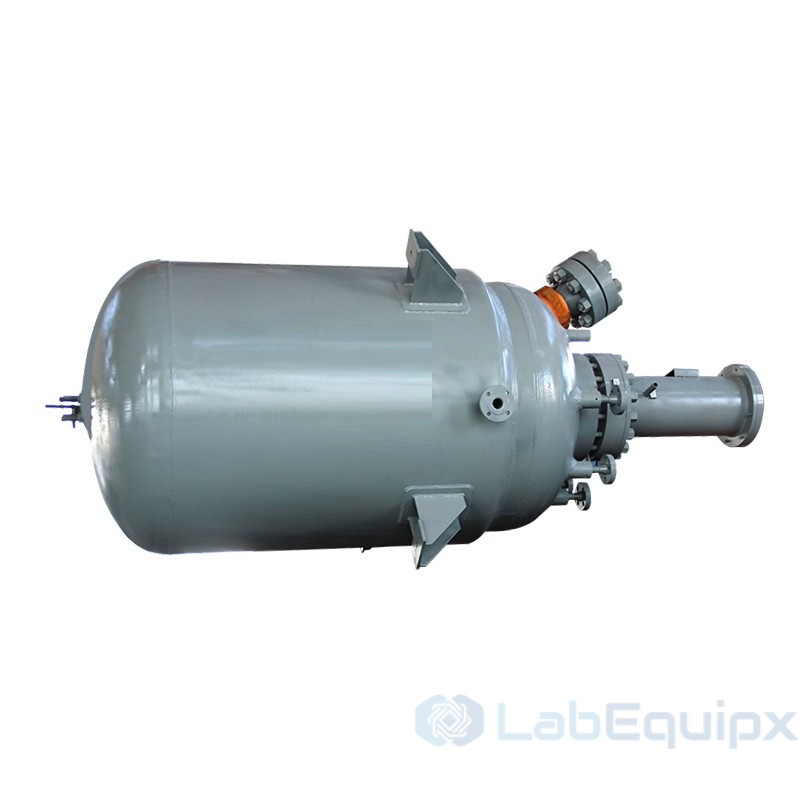
The LETCRV is a titanium or titanium clad stirred pressure reactor for highly corrosive service, especially processes that contain chlorides. Titanium handles oxidizing agents such as nitric acid, aqua regia and mixed acids, and resists chloride attack, but it is not suited to reducing acids such as sulfuric and hydrochloric acid. Use with sulfuric acid depends on concentration, temperature and the presence of oxidizing inhibitors, and is confirmed for each project. Hydrometallurgy plants use titanium vessels for acid ore leaching, along with chlorine chemicals, phosphoric acid and sea water duty.
Oxygen service
Titanium burns vigorously in oxygen at elevated temperature and pressure. Many hydrometallurgy plants handle oxygen and sulfuric acid in titanium equipment, but the ignition risk is always present and must be protected against whenever titanium and oxygen are used together. State oxygen partial pressure and temperature in the enquiry.
Design
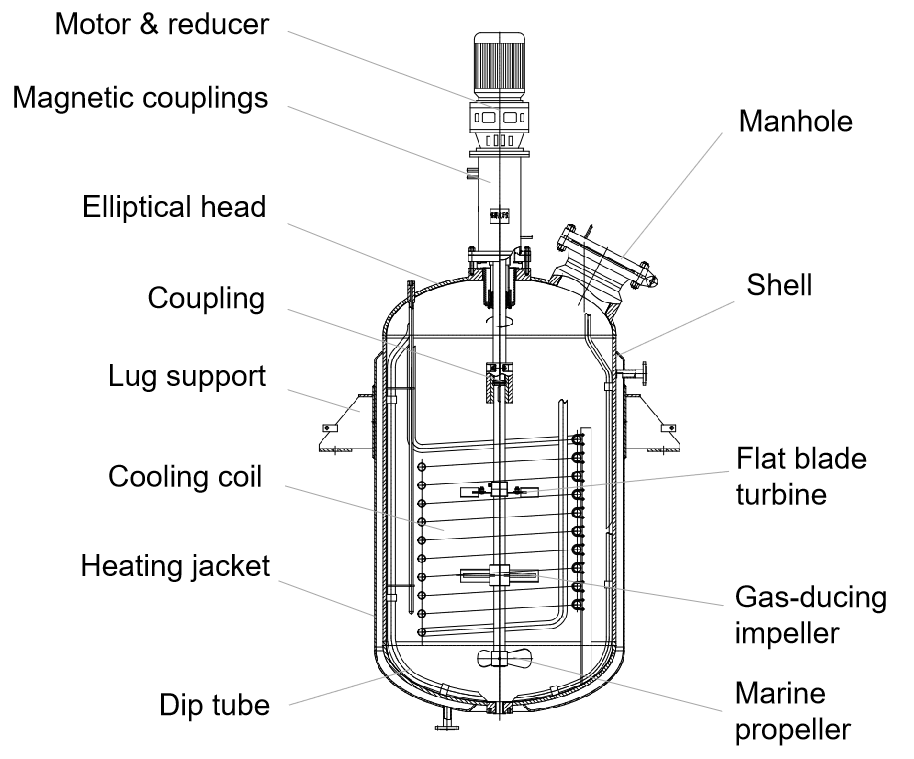
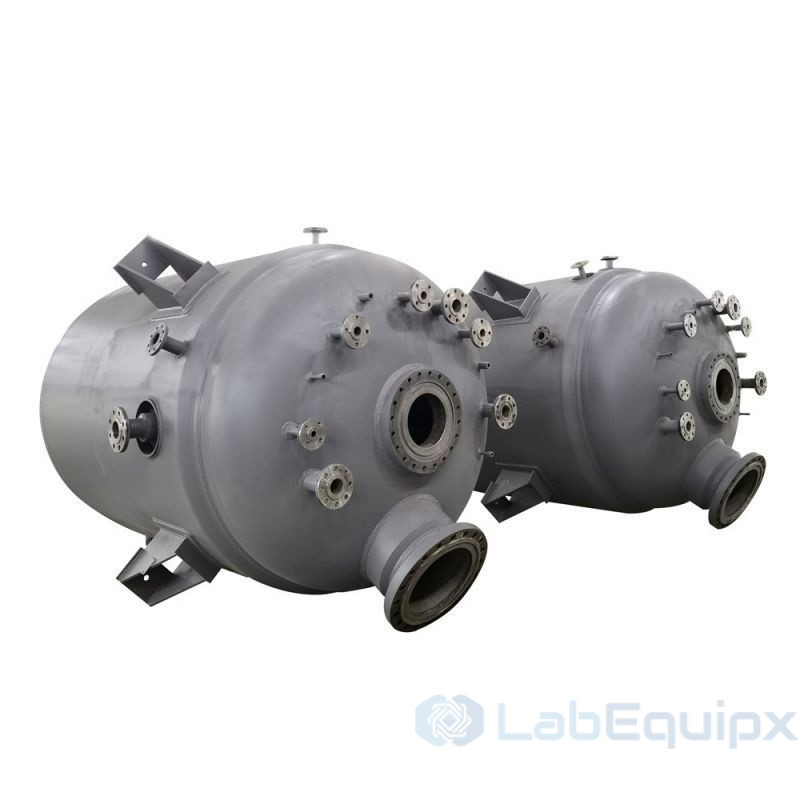
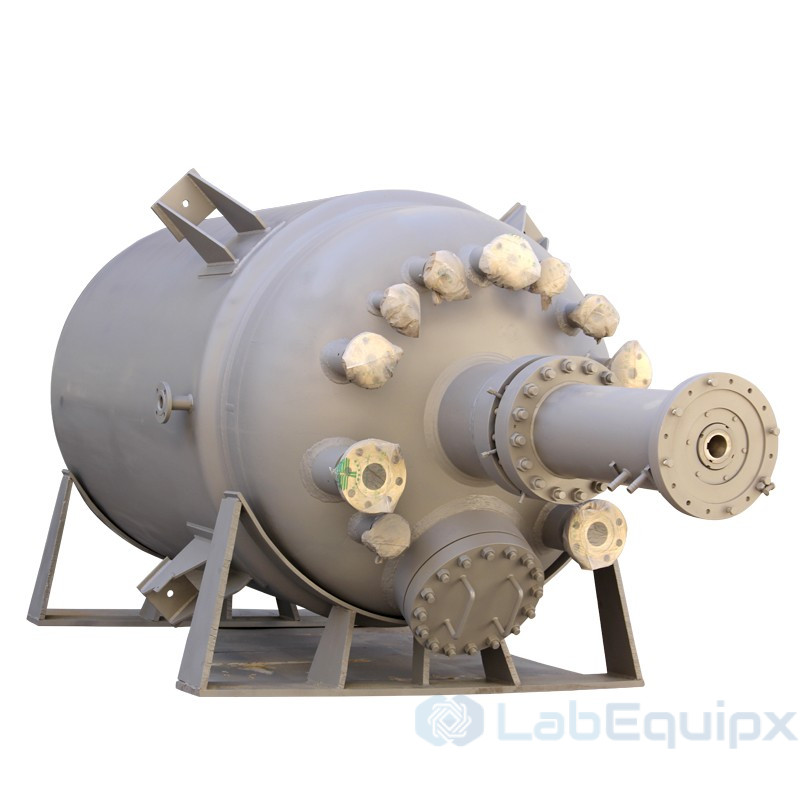
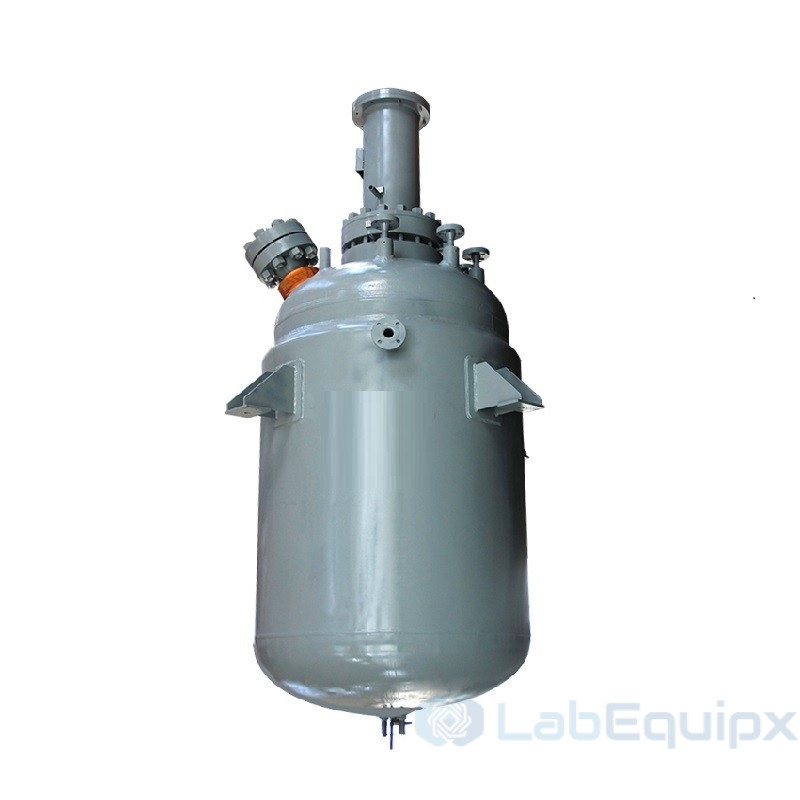
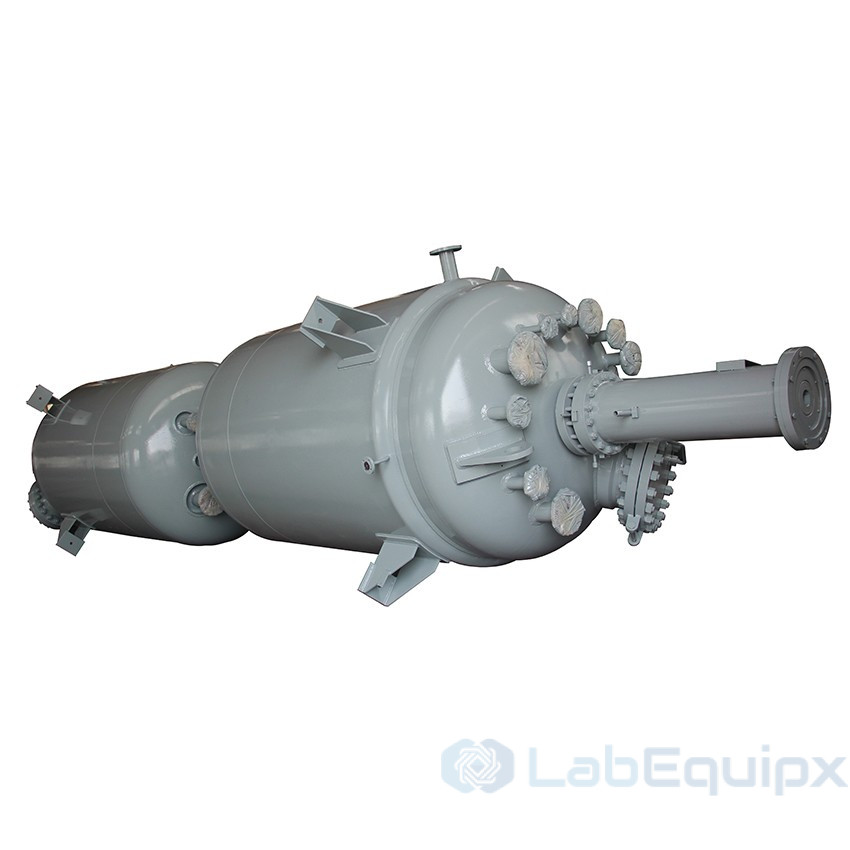
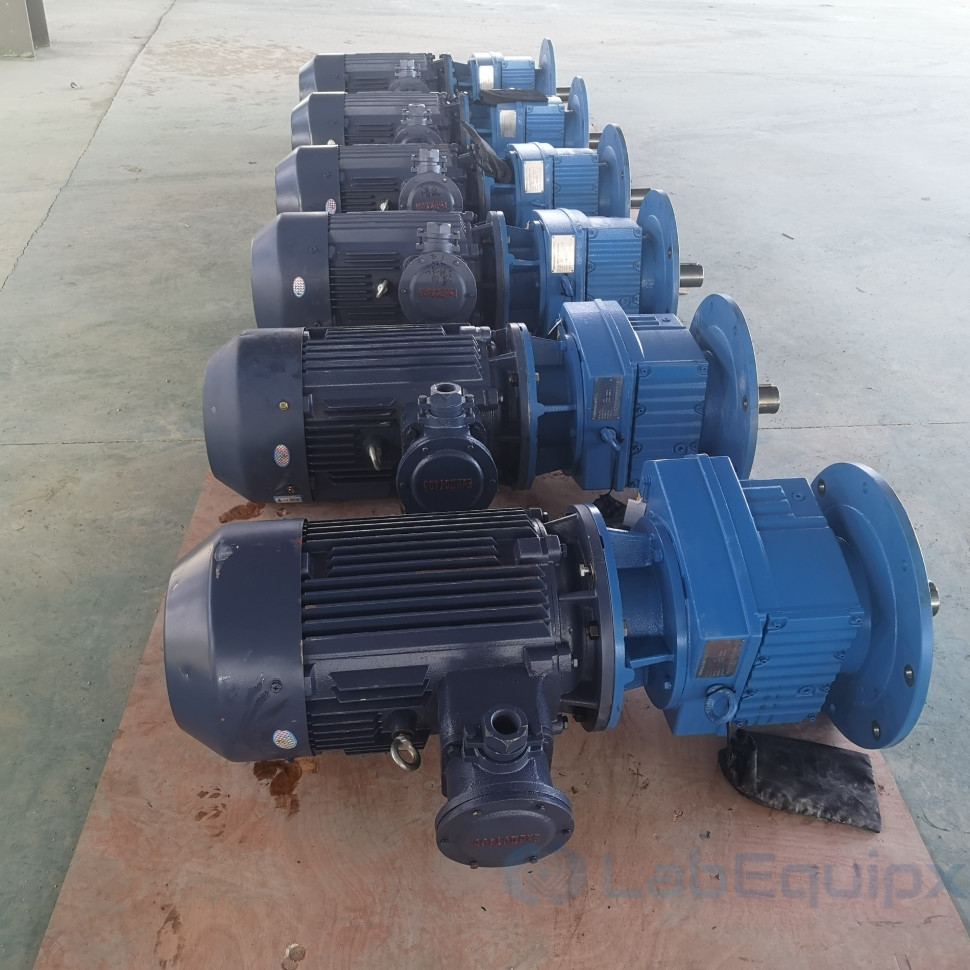
Nominal volume runs from 1000 L to 100 m3, with working pressure -1 to 200 bar and working temperature 0 to 300 °C. A low to high torque magnetic coupling gives a static seal; a mechanical seal is the alternative. Motor power is 5.5 kW to 125 kW and stirring speed 200 to 400 rpm. The impeller (propeller, paddle, anchor, turbine or a custom design) is chosen for the mixing duty. Heads are elliptical, conical, hemispherical or flat. Heating is by oil electric heating, oil or steam. The vessel stands on lugs or a floor stand. Clad plate is available. In clad construction the base plate, 6 to 200 mm thick, carries the pressure and the clad layer, 3 to 10 mm thick, resists corrosion.
Typical applications
- Hydrometallurgy and acid leaching
- Chlorine chemicals
- Phosphoric acid
- Sea water
- Nitric acid and other oxidizing acid processes
Fittings
- Internal cooling coil, baffles, dip tube and thermowell
- Vent port, liquid and powder charging
- Safety rupture disc and pressure safety valve
- Flush bottom outlet, light and sight glass, handhole or manhole
- Nozzles, manual or automated valves, fittings and control panel per requirement
Specify for your project
- Nominal volume, 1000 L to 100 m3
- Working pressure and temperature, up to 200 bar and 300 °C
- Solid titanium or titanium clad, and titanium grade (Gr1, Gr2, Gr3, Gr9)
- Oxygen presence and partial pressure
- Seal type, impeller and heating method
The LETCRV listing shows a 1000 L reference model.
This description defines the product family. Guaranteed performance, included hardware, exclusions, interfaces and acceptance criteria are stated only in the project-specific technical proposal and approved datasheet.
Features
- Large scale production- maximum volume reach to 100m3
- Max pressure: 200 bar; Max temperature up to 300 ℃
- Material:Titanium or cladding plate available
- Cladding plates use a base material for strength and a clad material for corrosion resistance.
- Low to high torque magnetic couplings: static seal.
- Acuurate Impeller selected for the mixing mission and requires.
- Internal cooling coil, vent port, liquid / powder charging, dip tube, thermowell, safety rupture disc, pressure safety valve, flush bottom outlet, baffles, light & sight glass, handhole / manhole etc.
- Nozzles, manual / automated valves, fittings, control panel & accessories offered based on requirement.
- Lugs or floor stand leg support.
Technical Specifications
Model LETCRV 1000L Norminal volume 1000liters-100m3 Material Titanium
Working pressure -1~200 bar Working temp. 0~300℃ Motor power 5.5kW-125kW
Stirring speed 200~400rpm Sealing method Magnetic seal
Mechanical seal
Stirrer Porpeller;Paddle type;
Anchor type;Turbine type
Other as designed
Head type Elliptical type
Conical type
Hemispherical type
Flat type
Heating type Oil electric heating
Oil heating
Steam heating
Material Available
Carbon steel
Q235R, Q345R, 15CrMoR,
16MnDR(Low temp. steel)
Austenitic stainless steel
304/304L, 316/316L, 310S, 321
Duplex stainless steel
S32205, S32507
Titanium alloy
Gr1, Gr2, Gr3, Gr9,
TA1, TA2, TA3, TA9, TC10
Zirconium alloy
Zr-1, Zr-3, Zr4
Nickel alloy
N6,Monel400, HastelloyC276,
HastelloyB-2; Incoloy600
Nonmetallic Materials
PTFE, PPL, PFA
Note: Cladding plates use a base material for strength and a clad material for corrosion resistance.
- Base Thickness:6-200mm;
- Clad Thickness: 3-10mm.
Product Details
Structure Drawings
Related products




| Brand | Coretest |
