Send a request
LE/ROCK/CELL
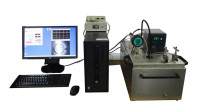
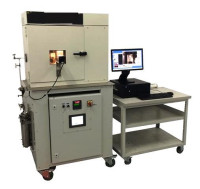
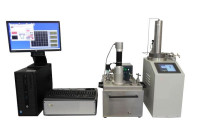
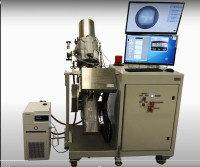
Rocking Cell Hydrate Studies System
An elongated cell provides a view of hydrate formation, precipitation and dispersion. Measurements follow the pressure decrease to assess formation, and tests can also evaluate how hydrate inhibitors perform. A cooling jacket surrounds the cell. It connects to a chiller that regulates the test temperature.
At one end, a camera views the fluids through a sapphire window and sends the images to a monitor during the experiment. An endoscope at the other end records the fluids inside the cell. An electric motor rocks the table supporting the cell. This movement mixes and disperses its contents. Changing the angle and speed of rocking adjusts the flow regime within the cell to the desired test conditions.
This description defines the product family. Guaranteed performance, included hardware, exclusions, interfaces and acceptance criteria are stated only in the project-specific technical proposal and approved datasheet.
Technical data
- The rated pressure is 6,000 psi.
- Temperature can range between -20°C and 60°C.
- The cell has a diameter of 50 mm.
- The cell is 900 mm long, and pressure measurement accuracy is 0.1% of full scale.
- Temperature readings have an accuracy of ± 0.1°C.
- Hastelloy is used for the parts in contact with fluid.
- Electrical input requires 220 VAC at a frequency of 50 Hz.
Operation and applications
- The arrangement operates in semi-batch mode.
- Multiphase pseudo-flow studies can include stratified flow, wavy stratification, slug flow and dispersed bubbles.
- Temperature control covers the surface and the bulk fluid.
- The test pressure can be controlled.
- Experiments need only a small fluid quantity, on the order of a liter.
- The contents of the cell can be viewed in full.

| Model | LE/ROCK/CELL |
| Brand | Coretest |
