Send a request
High-pressure Reactor
High-pressure Reactor LEHPRA200 is one of the modifications of the chemical reactors. Allow processes to be carried out at high temperature and pressure (hydrogenation, carbonylation, etc.).
High-pressure Reactors LEHPRA200 are based on control unit with a heating plate and a solid-state bath, a reaction vessel, a stirrer, a pressure gauge, a rupture membrane, and a cooling coil. Optionally, the system can be equipped with a gas selection module, automatic pressure control, flow meters, and software.
Features:
- Interchangeable working vessels from 100 ml to 450 ml
- Max. pressure up to 200 bar
- Material: stainless steel, hastelloy or titanium
- Solid-state bath is easily mounted onto the heating plate
- Stirring is performed by either a top-driven stirrer or a magnetic stirrer
- Safety system includes a rupture membrane and a vent valve
- Temperature is displayed on the Atlas control unit
- Ability to record parameters (T, P, speed) without software with subsequent export to Excel
- Software and additional modules for gas selection, etc. are available.
Specifications:
- Working volume: 100 ml, 160 ml, 300 ml, 450 ml
- Working temperature: room temp. ... +250°C
- (up to +300°C upon request, down to -40°C with additional cooling)
- Working pressure: 50 mbar ... 200 bar
- Stirrer type: propeller
- Max. speed: 800 rpm (top-driven stirrer)
- 1200 rpm (magnetic stirrer)
- Heating type: electric
- Cooling type: optional
- Design: desktop / floor-standing.
Pressure Sensor. Temperature Sensor:
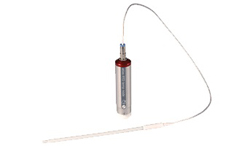
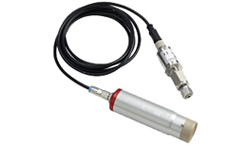
To display temperature on the control unit (or in the software) and export the values to Excel, an external PT100 sensor can be connected via a special adapter. A pressure sensor can also be connected to the base via a special adapter. The sensor is designed for pressures up to 200 bar.
Gas Selection Module:
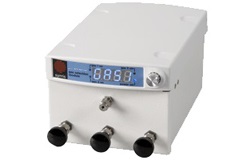
The Gas Selection Module allows connecting 3 gases (or 2 gases and a vacuum pump) to a single input, but only one gas can be supplied to the reactor at a time. The module is controlled by a rotary knob on the front panel. Additionally, the module can be connected to a computer with software. Each gas has a flow regulator, and the valves are made of SS316 stainless steel. The module is designed for pressures up to 200 bar (maximum pressure is limited to 100 bar when using hydrogen).
Pressure Control Module:
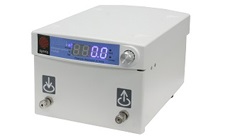
This module automatically controls gas dosing into and out of the reactor. There are 3 modes: Pressure Maintenance - the inlet valve opens if the pressure drops below the minimum, or the relief valve opens if the pressure exceeds the maximum. The Gas Pressure Control Module automatically maintains the pressure within the specified range. Ventilation - the inlet valve is closed, and the relief valve is opened. Purging - both the inlet and outlet valves are opened. The pressure control module can be controlled via a rotary knob on the control panel or software. The valves are made of 316L stainless steel, and the module is designed for pressures up to 200 bar.


Related products




| Brand | Coretest |
