Send a request
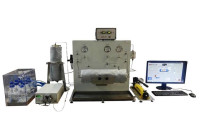
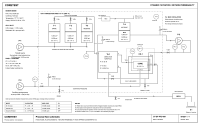
CT-STIM-FDS
Formation Damage and Well-Treatment Evaluation System
Function. Quantifies the effect of drilling and completion fluids on the formation by tangentially circulating fluid across one core face and measuring the resulting permeability change.
Controlled. Confining and pore pressure; temperature; circulation and injection.
Measured. Permeability change (return permeability) and filtration.
Pressure and temperature ratings, wetted materials, cell geometry and instrumentation are configured per project. Guaranteed performance and included hardware are stated only in the project-specific technical proposal and approved datasheet.
Features
- Maximum confining pressure : 700 bar (10,000 psi)
- Maximum pore pressure : 350 bar (5,000 psi)
- Maximum mud pressure : 350 bar (5,000 psi)
- Maximum working temperature : 150°C
- Core diameter : 1.5" other upon request
- Core length : 2 to 4" other upon request
- Mud flow rate : up to 3 liter/min
- Material: Stainless steel, Titanium, hastelloy
- Power supply : 220VAC, 50Hz
- Air Pressure requirements : 7 bar (100 psi)
Benefits
- Drilling mud tests are performed under realistic field conditions by flowing the fluids tangentially to the face of the core, thanks to a special leak-off core holder.
- Mud pump flow rate of 3 l/min max ensures an efficient shear rate to simulate the real operating conditions.

| Model | CT-STIM-FDS |
| Brand | Coretest |
