Send a request
Horizontal Reactors
LEHR Horizontal Reactors mix biological feedstocks and other cellulosic materials by tumbling them with internal stirrers. Suitable feed materials include:
- Straw feedstock.
- Corn stover feedstock.
- Sugar cane feedstock.
- Grasses as feedstock.
- Plant material.
- Wood pulp material.
- Wood chips.
- Fibrous material.
The horizontal arrangement lets the stirrers tumble the charge rather than mix it with a conventional vertical stirrer. The custom reactor is secured upright for loading, then tilted safely to the horizontal position for mixing. A design that operates in both vertical and horizontal positions can also be supplied.
This description defines the product family. Guaranteed performance, included hardware, exclusions, interfaces and acceptance criteria are stated only in the project-specific technical proposal and approved datasheet.
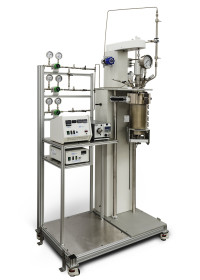
The one liter reactor supports stirring with the vessel positioned vertically or horizontally. It uses a heavy-duty stirring motor and double anchor stirrers. A cylinder tilt mechanism can be added as an option to assist discharge.
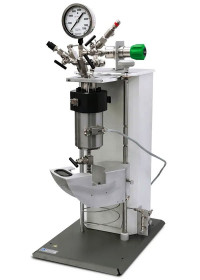
The 1 gallon pressure reaction system uses a fixed head reactor on a floor stand. Its temperature rating is up to 350 °C and its maximum pressure is 1900 psig. Stirring, heating and cooling can operate in five positions: vertical, horizontal and three intermediate inclinations of 22.5, 45, or 67.5 degree. A cast aluminum heater incorporates cooling channels to provide the heating and cooling functions in these orientations.
The 1.8L pressure reaction system also has a fixed head and floor stand. This version is rated for temperatures up to 500 °C and a maximum pressure of 5000 psig. It operates with the reactor in either a vertical or a horizontal position.
Larger capacity systems can also provide horizontal operation. The five gallon arrangement supports stirring vertically or horizontally. Pneumatic controls located on the left tilt the assembly upright so that the bottom drain valve can be opened. The discharged product passes through filtration and collects in a heated sample collection vessel below the reactor. This arrangement is used to produce synthetic fabric from biomass, providing an alternative to a petroleum-based production process.


Related products


| Brand | Coretest |
