Send a request
Parallel Pressure Reactor
The LEPPR is a modular parallel pressure reactor system with 2 to 6 stirred reactors of 50 ml to 300 ml each. Chemical research and process development groups use it to run hydrogenations and catalyst tests side by side under the same or different conditions, from -1.0 (FV) to +150 bar and -20 °C to +300 °C. Each reactor can run on its own settings or in parallel with the others.
Design
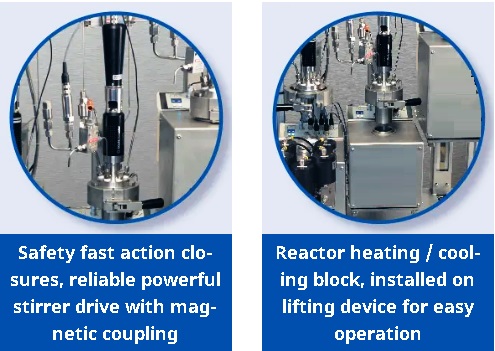
Every reactor sits in its own heating and cooling block with individual temperature control, measured by a Pt100 sensor. A lift raises and lowers the reactor block. The reactors have a safety fast action closure, a safety rupture disc and a cover with 6 openings for the Pt100, dip tube and valves.
- Stirrer: magnetic coupling, 75 Ncm torque, 0 to 2500 rpm continuously adjustable
- Wetted materials: stainless steel, Hastelloy, tantalum, PTFE inliner
- System expandable, starting at 2 reactors
Control
The software runs manual mode, with hardware control and data logging, up to full automation including gas and liquid dosing. A recipe editor builds processes by drag and drop, with if-then-else logic, loops and jumps, and allows changes during a run. Control parameters include pressure, temperature, gas and liquid flow, gas consumption, stirrer speed and safety limits. Each reactor has its own chart of gas flow (nL/min), consumption, temperature, pressure, rpm and feed.
Automated steps include inert gas purging, leakage control, gas purging and reaction at constant flow or constant pressure. A hydrogenation ends on total gas consumption, minimal gas flow or time.
Options
- Automated sampling, up to 4 samples per reactor
- Liquid dosing via balance, within the 150 bar reactor rating
- Metering pump in SS316 or PEEK, 0.003 to 40 ml/min
- Burette, catalyst basket, gassing stirrer
Typical applications
- Parallel hydrogenation and catalyst testing
- Process development, scale up, DoE and QbD
- Carbonylation by CO, carboxylation by CO2, decarboxylation
- Friedel-Crafts acylation, ethoxylation (optional)
- Gas reactions at constant flow (CO, CO2, ethylene, O2, NO)
Specify for your project
- Number of reactors, 2 to 6, and volume, 50 to 300 ml
- Pressure and temperature range
- Wetted material
- Gases and liquids to dose
- Automation level and sampling
This description defines the product family. Guaranteed performance, included hardware, exclusions, interfaces and acceptance criteria are stated only in the project-specific technical proposal and approved datasheet.
Modular Hardware
- 2 - 6 Reactors PPR systems are available
- Individual or parallel operation settings for each reactor (temperature, other)
- Configurable hardware: from Basic to complete setup including dosing
- Automated sampling
Operation modes
- Manual: The software controls the reactor hardware, data logging of process data
- Automated: Low to high degree (full process automation including dosing of gas, liquids)
- For full automation, a recipe editor is included in the software to edit existing settings and to define completely new processes.
- Multiple safety features guarantee safe hydrogenations and other processes
Hardware - Pressure Reactors
2 - 6 pressurized reaction vessels in its individual heating / cooling blocks can be controlled in the PPR system. The system is expandable, starting at 2 reactors.
- Reactor block with individual heating / cooling
- Lift for Reactor block lifting / lowering
- Individual temperature control
- Reactor with safety fast action closure
- Stirrer drive with powerful magnetic coupling (75 Ncm torque)
- Continuous adjustable agitator speed, 0-2500 rpm
- Safety rupture disc
- Pt100 sensor
- Cover with 6 opening (for Pt100, dip tube, valves etc.)
- Optional burette, catalyst basket, gassing stirrer etc.
- Optional liquid dosing via balance (within the 150 bar reactor rating)
- Optional liquid dosing, SS316 pr PEEK corrosion resistant metering pump, flow rates 0.003 to 40 ml/min
Examples
Software - Process setting & control
The PPR software is user-friendly. Every single process step can be followed on the graphic display. GxP compliance on request; data can be exported. Multiple safety features guarantee safe process procedures. Operation mode can be chosen from manually to fully automated, depending on installed hardware.
Control parameters are: Reaction pressure, temperature, gas, liquid flow, gas consumption, stirrer speed, safety limits etc.
Software - Process setting & control overview
Available single automation steps:
- Inert gas purging
- Leakage control
- Gas purging (nitrogen / active gas)
- Reaction control mode constant-flow
- Reaction control mode constant reaction pressure
- Etc.
- End criteria to stop a hydrogenation:
- Total gas consumption
- Minimal gas flow
- Time over event controlled
End criteria to stop a hydrogenation:
- Total gas consumption
- Minimal gas flow
- Time over event controlled
Individual chart for each reactor, showing actual gas - flow (nL/min), Gas consumption, process temperature, pressure, rpm, feed.
Setting up recipes: drag & drop editor, recipe modification "on the fly", functions as if..then...else logic, loop, jump back to phase.
Options - automated sampling
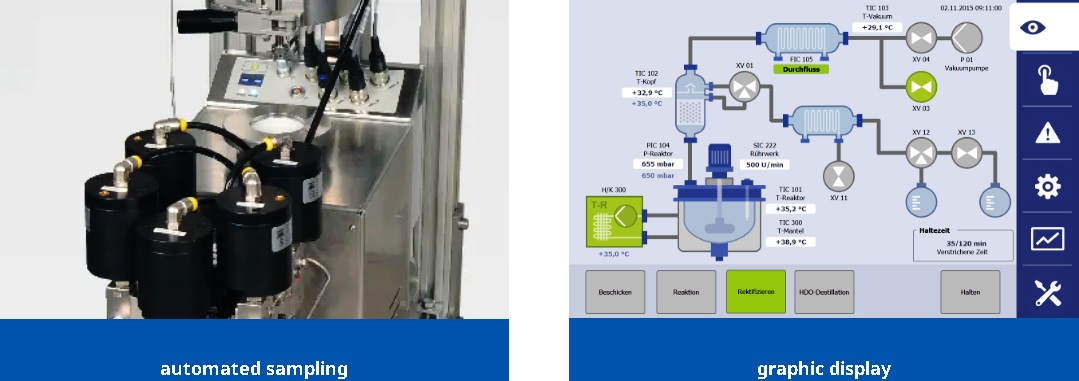
Automated sampling:
- Contamination free
- Up to 4 samples of each reactor
- Automated (recipe) or manually controlled
- Sampling shown live in graphic display
Typical applications
- Hydrogenations in parallel
- Catalyst testing in parallel
- Process development, scale up studies
- Carbonylation by CO / Carboxylation by CO2
- Decarboxylation
- Friedel-Crafts-Acylation
- Ethoxylatons (optional)
- General gas reactions at constant flow (CO, CO2, Ehtylen, O2, NO)
- Design of experiment (DoE)
- Quality by Design (QbD)

Related products



| Brand | Coretest |
