Send a request
CT-TC Series
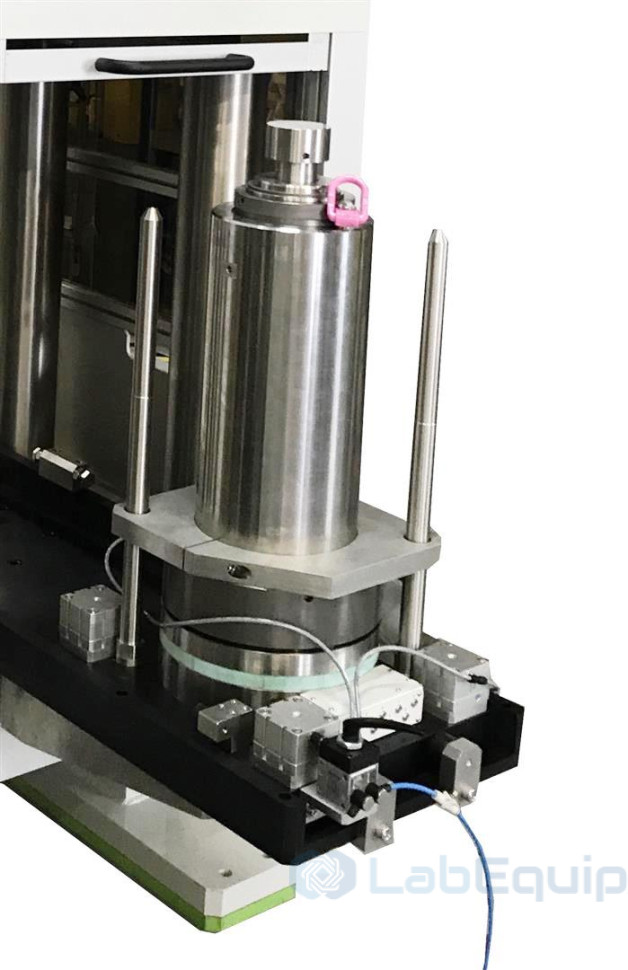
Coretest Triaxial Pressure Cell Series
Coretest triaxial pressure cells apply controlled confining pressure to jacketed cylindrical rock specimens. The series covers passive cells for use in an external loading frame, integral-deviatoric configurations, pressure-balanced designs, Hoek cells, acoustic measurement cells and quick-release systems.
Configuration Selection
Model Configuration Axial loading Pressure compensation Typical application CT-TCP Passive Triaxial Cell External loading frame Standard piston arrangement General confined compression and deformation testing CT-TCBP Balanced Passive Triaxial Cell External loading frame Balanced piston compensates confining-pressure thrust Tests requiring pressure-thrust compensation CT-TCD Deviatoric Triaxial Cell Integral axial actuation Standard piston arrangement Combined axial-load and confining-pressure control in one assembly CT-TCBD Balanced Deviatoric Triaxial Cell Integral axial actuation Balanced piston compensates confining-pressure thrust Integral deviatoric loading with pressure balancing CT-TCH Triaxial Hoek Cell External loading frame Standard piston arrangement Rapid confined compression and failure-envelope testing of rock cores CT-TCA Triaxial Acoustic Cell External loading frame Configured to test requirements P- and S-wave velocity measurement during mechanical loading CT-TCQ Quick-Release Triaxial Cell External loading frame Standard piston arrangement High-throughput testing with rapid specimen access Common System Architecture
- Pressure-rated cell body for jacketed cylindrical specimens
- Confining-fluid inlet, pressure measurement and controlled venting interfaces
- Axial loading through a host frame or integral actuator, depending on configuration
- End platens and feedthroughs selected for the required pore-pressure, strain, acoustic or electrical measurements
- Seal and wetted-material selection based on pressure, temperature and fluid compatibility
Configuration and Engineering Options
- Specimen diameter and length
- Maximum confining pressure and axial-load envelope
- Ambient, heated or application-specific temperature configuration
- Local axial and radial strain measurement
- Pore-pressure, permeability and flow interfaces
- Ultrasonic, acoustic-emission or electrical feedthroughs
- Corrosion-resistant wetted materials and application-specific seals
RFQ Inputs
Required information Examples Specimen Material, diameter, length, jacket and end-interface requirements Mechanical envelope Maximum axial load, displacement, strain and loading mode Pressure and temperature Confining and pore pressure, operating temperature and ramp requirements Fluids and materials Fluid identity, phase, corrosivity and required wetted materials Measurements Local strain, pore pressure, flow, acoustic, AE or electrical channels Integration Host loading frame, pumps, controllers, DAQ and connection standards Reference selection guidance only. Final ratings, dimensions, materials and interfaces are defined in the approved project-specific datasheet.
Features
- Core diameter: up to 54.7 mm (model 1) and up to 100 mm (model 2)
- Core length : twice the diameter
- Max confining pressure : 70/140 MPa
- Working temperature : ambient to 150° C
- Wetted parts: Stainless steel
Benefits
- Easy to operate
- Models available for different specimen sizes
- High pressure, high temperature capability
- ASTM-compliant


| Model | CT-TC Series |
| Brand | Coretest |
