Send a request
LECREHSET1000
Chemical Reactor For Explosive Hydrolysis LECREHSET1000 Series
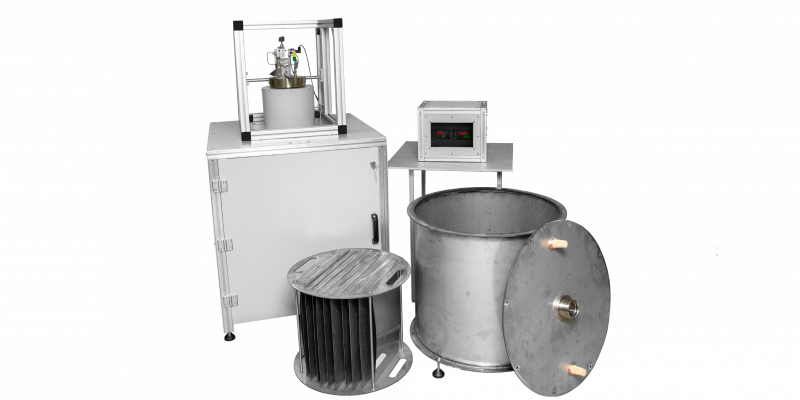
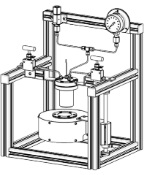
The chemical reactor LECREHSET1000 Series for conducting the explosive hydrolysis process allows for hydro-explosion to be carried out in laboratory conditions. The installation is equipped with a bottom electromagnetic valve and a receiving tank for discharged steam. Radiator plates are located in the receiving tank for accelerated condensation of the released steam. Experiment control can be remotely performed using software installed on a PC. The explosive hydrolysis process is used for breaking down various porous, steam-impregnated materials, such as sawdust.
The chemical reactor LECREHSET1000 SERIES can be supplied with containers for material loading. After placing the container in the reactor vessel and sealing the system, thermobaric conditions are created in a steam environment (up to 150 bar and 270 °C). After reaching the required conditions, the operator commands to open the bottom valve. All the steam instantly exits to the receiving tank, after which the explosive hydrolysis process is considered complete.
The cover of the chemical reactor for implementing the explosive hydrolysis process is fixed on a swivel guide. Components of the installation, such as rupture discs, valves, pressure sensors, and other elements, are mounted on an integrated frame and provide convenient loading and unloading of materials from the reactor. The control unit allows for the control of the installation, recording of experiment parameters, as well as exporting data to USB drives and PCs.
Specifications
- Operating pressure (bar) 100
- Maximum pressure (bar) 150
- Operating temperature (°C) 250
- Maximum temperature (°C) 270
- Material of vessel and cover SS 316/Has C276/Titan
- Volume (cm3) 1000
- Receiving tank volume (cm3) 150,000
- Internal diameter (mm) 80
- Internal height (mm) 200
- Sealing material Graphite/VITON/PTFE
- Cover connection type Threaded/Bolted
- Valve internal diameter (mm) 40
- Valve opening time (ms) 20
Features:
- An autoclave is used to carry out the process of explosive hydrolysis and enables hydroexplosion to be realized under laboratory conditions. Explosive hydrolysis can be used to break down porous water-impregnated bodies (e.g. wood chips).
- The autoclave is equipped with a bottom electromagnetic valve (ID=40mm). The valve can fully open in 20 ms. The release of overheated steam occurs under conditions of high pressure (up to 150 bar) and high temperature (up to 270 degrees Celsius according to the Celsius scale).
- The installation is equipped with a 150-liter stainless steel receiving tank, which includes plates for steam condensation. There are relief mesh filters on the top cover of the receiving tank to equalize the pressure in the tank with the atmospheric pressure. A drain valve is located at the bottom of the receiving tank.
Options:
- Teflon cup (used for aggressive media)
- Magnetic stirrer
- Sampling line
- Sapphire window
- Tilt mechanism (180° flip)
- Touch control panel
- Hastelloy/Titan hardware
- Controlled hardware (pneumatic/electric)
- Process automation (software for the process)
- Remote control of the installation
- Bottom electromagnetic valve (ID=40mm)
Sealing of the reactor lid:
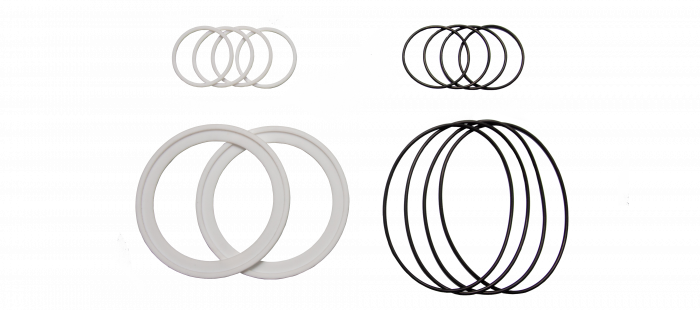
A special design of the sealing ring seats allows the use of different types of sealing rings with the same reactor. This significantly expands the temperature range capabilities of the reactor. Thus, when using graphite seals, the reactor can operate at temperatures up to 700 °C.
Rupture membrane
The rupture membrane is used to prevent the reactor vessel from being damaged. The rupture membrane is installed on the frame in such a way that the operator can work safely with the installation. The attachment of the rupture membrane allows unobstructed access to the internal contents of the reactor vessel.
Pressure sensor/Manometer
The chemical reactor for carrying out explosive hydrolysis LECREHSET1000 Series is equipped with a pressure sensor, which allows the control unit to record the parameters of the experiment and alert the operator if the set parameters are exceeded during uncontrolled pressure increase during the experiment.
Temperature sensor
The installation is equipped with two temperature sensors, which are necessary for the proper operation of the heating jacket. One sensor is located directly in the heating element, and the second is located as close as possible to the internal environment.
Heating jacket
The heating jacket consists of a heating element mounted with minimal clearance from the autoclave body, insulation, and a protective casing. The insulation reduces heat loss and speeds up heating, as well as protects the operator from burns.
Aluminum frame
The aluminum frame allows for a firm fixation of all installation components. The reactor body is designed to provide convenient and quick access to all installation components.
Control panel
The control panel allows for the control of the installation. In addition, the control panel enables the recording of the main parameters of the experiment.
Steam receiving tank
The receiving tank is necessary for the safe discharge of overheated steam. The tank is equipped with relief mesh filters, which equalize the pressure in the tank with the atmospheric pressure. The tank can be easily connected to the installation using a threaded nut.
Condenser radiator
The radiator is designed to accelerate the condensation of water vapor. The radiator is installed in the receiving tank. The plates are made of stainless steel, which is corrosion-resistant.
Electromagnetic valve
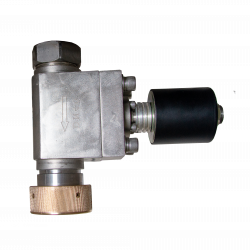
A special design electromagnetic valve allows for operation with high-pressure and high-temperature steam (150 bar, 270 °C). The internal nominal diameter is 40 mm, which ensures a rapid steam release. The valve is capable of opening instantly with a full opening time of 20 ms.
Standardized connections
The lid and body of the reactor can be sealed with different types of seals, which significantly expands the capabilities of the installation.
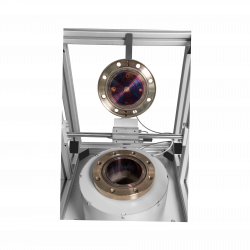
The threads on the installation are standardized. Instead of the receiving tank, resonators, rupture membranes, and other devices can be installed.
Remote control
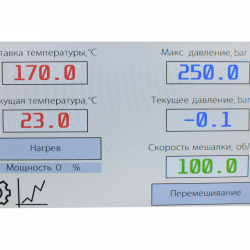
The LECREHSET1000 Series installation can be equipped with a remote control panel. This allows the experiment to be conducted and recorded remotely through a network. The operator does not necessarily have to be near the installation.
Easy material loading
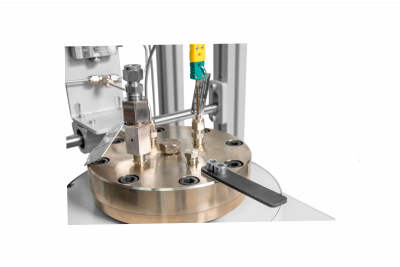
All components of the reactor lid are attached to an integrated frame. All components can move freely along with the lid. This makes it easy and fast to place materials into the autoclave chamber.
The delivery set includes:
- Chemical reactor LECREHSET1000 Series assembly
- Needle valve 1/8'' Butech - 2 pcs.
- Rupture safety membrane - 2 pcs.
- Pressure gauge/pressure sensor - 1 pc.
- Heating jacket - 1 pc.
- Receiving tank 150 L - 1 pc.
- Electromagnetic valve - 1 pc.
- Control panel - 1 pc.
- Frame for fixing components - 1 pc.
- Documentation kit (passport, user manual, quality certificate, factory testing protocol, documentation for individual components).
The installation comes with FITOK high pressure and high temperature hardware as standard. FITOK hardware meets the highest requirements and ensures safe operation throughout the entire service life.
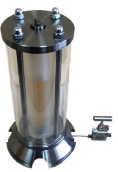

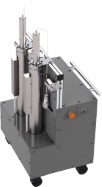
Sapphire cell Mixing device High-pressure precision pump The reactor can be equipped with sapphire windows. These windows allow for visual observation of processes occurring under thermobaric conditions. The reactor vessel can be entirely made of sapphire. A mixing device with a magnetic coupling provides efficient mixing of fluids with different viscosities under conditions of high pressure and temperature. A plunger precision high-pressure pump delivers substances with a maximum pressure of 1000 bar and an accuracy of 0.0005 ml. 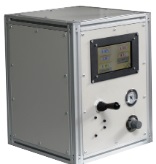
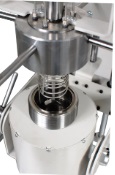
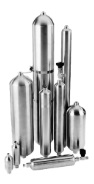
Control block Cooling circuit Sampling system The control unit allows for monitoring and recording of experimental parameters during the reaction process. The control unit can be equipped with either a touchscreen or can output data to a PC. The cooling system is designed for fast and efficient cooling of the reactor contents. The system can be cooled by air, liquid, or a heat transfer fluid. The cooling system is made of materials that are corrosion-resistant in the autoclave's working environment. One of the most common options in medium-sized reactors. The sampling system consists of a dip tube, three shut-off valves, and a sampling cylinder. 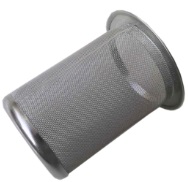
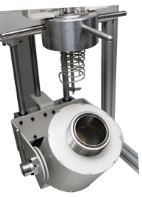
Material containe Heating jacket Rotary mechanism The material container provides convenient loading and easy removal of material from the reactor housing. The size of the cells can be changed upon the customer's request. The container is typically made of mesh material with a 1x1 mm cell. The heating jacket can be mounted directly on the reactor housing. Additionally, the heating element can be installed on a special heat-conducting metal sleeve. The gap between the sleeve and the reactor is minimal. The rotary mechanism is necessary for convenient unloading and loading of materials. Additionally, the rotary mechanism allows for flipping the container 180 degrees.


| Model | LECREHSET1000 |
| Brand | LabEquipx |
